Dangling
Project description
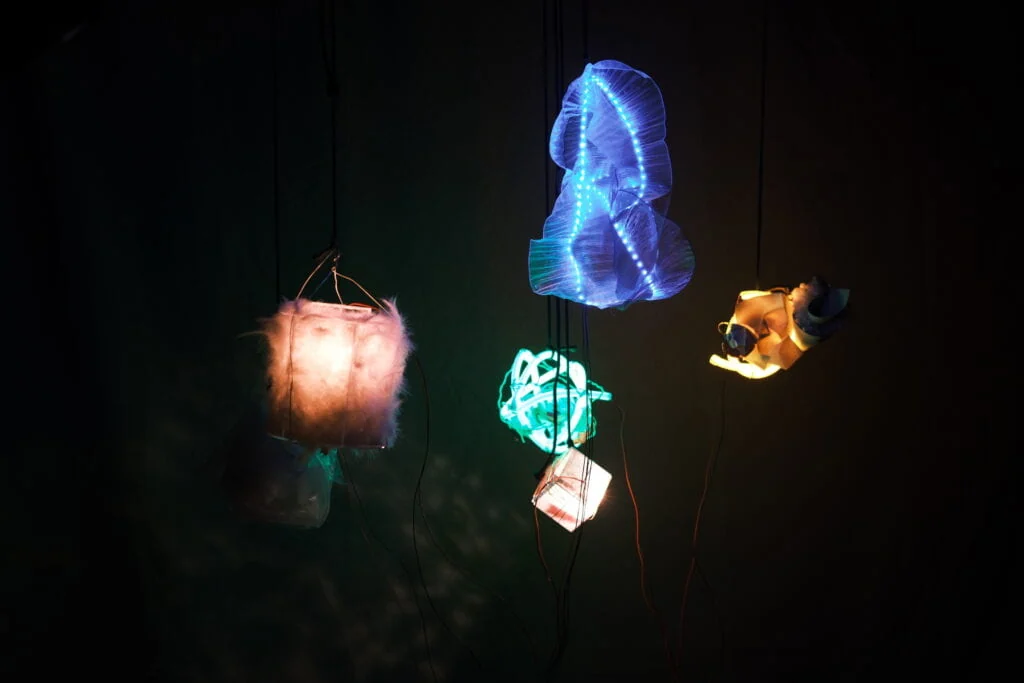
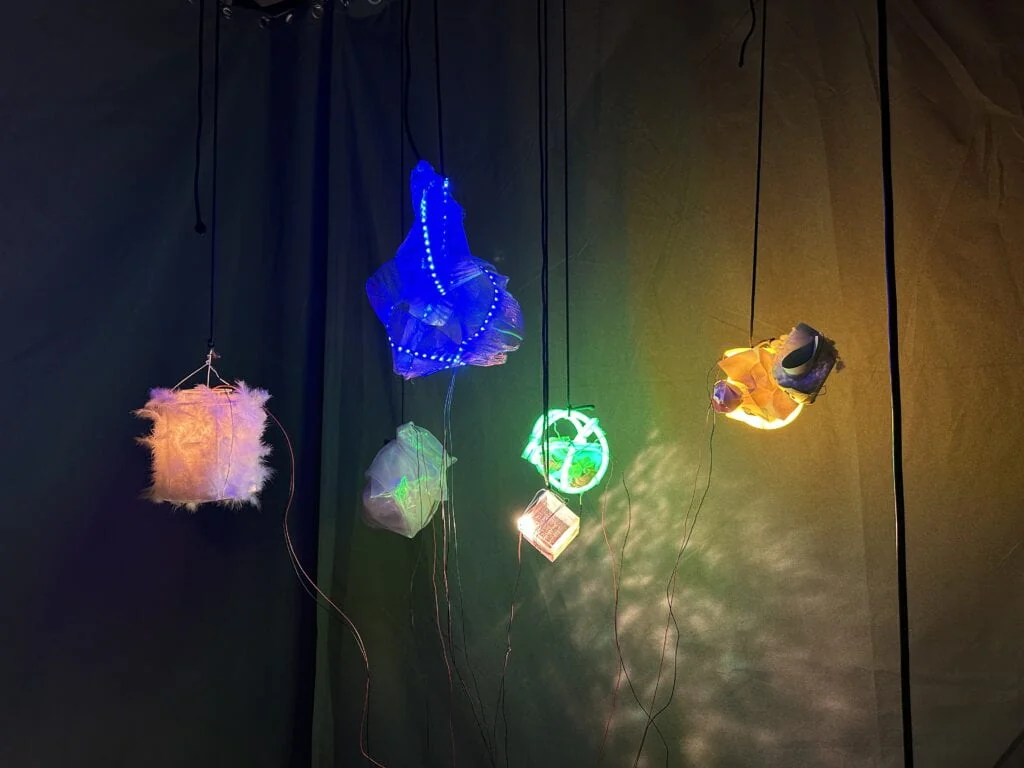
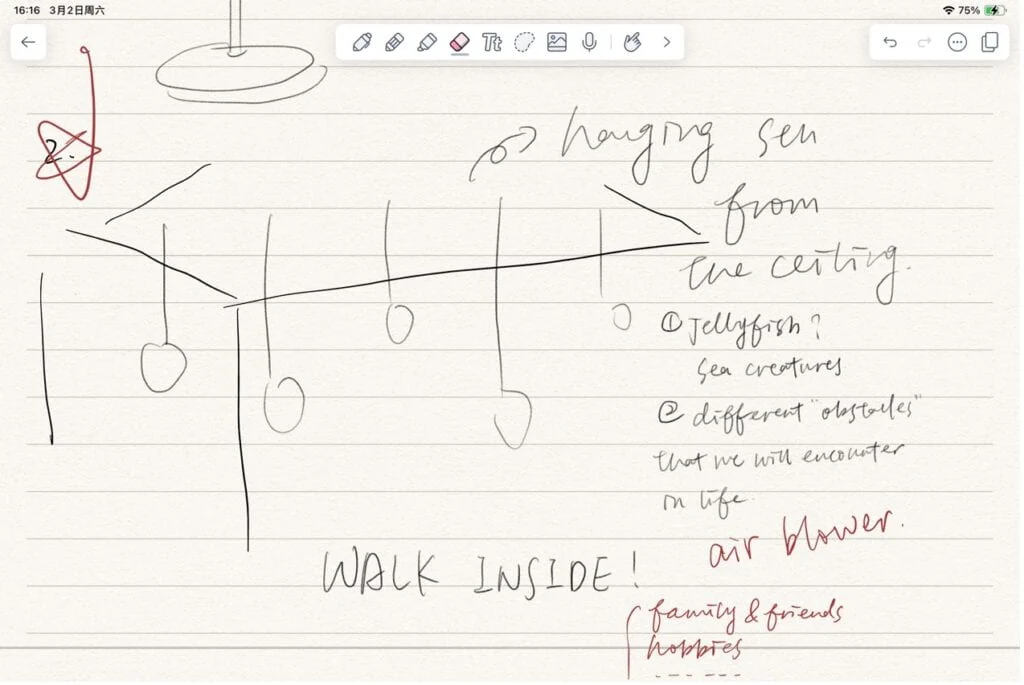
My inspiration of this project was that I wanted to create an installation which goes beyond a still sculpture and involves the interaction and participation of the audience. Therefore, I had come up with the idea of hanging some light objects from the ceiling and inviting people to walk through them.
After talking to my professor, I decided not to make the shapes too concrete to represent the meanings I impose on them. Instead, I would like to use the changes in color and brightness to invoke the audiences’ own interpretation of my light installation.
Perspective and Context
One thing that inspired me the most during my previous learning is the term synesthesia, indicating that some people may have the ability to link one (or more) sensory with another, thus having a transaction between different perceptions.
Another thing that I was reminded of is the phenomenology of Maurice Merleau-Ponty. The most crucial feature of this philosophy is that it prioritizes the experiences of individuals, and argues that the aesthetics of people comes from their own experiences of relevant conditions. I didn’t realize that until my professor suggested me in his feedback on my proposal that I should not create too concrete things which display exactly the concepts I wanted to convey. Instead, I should work on the variation of the dangling objects and leave room for the audience to generate their own interpretations.
Development & Technical Implementation
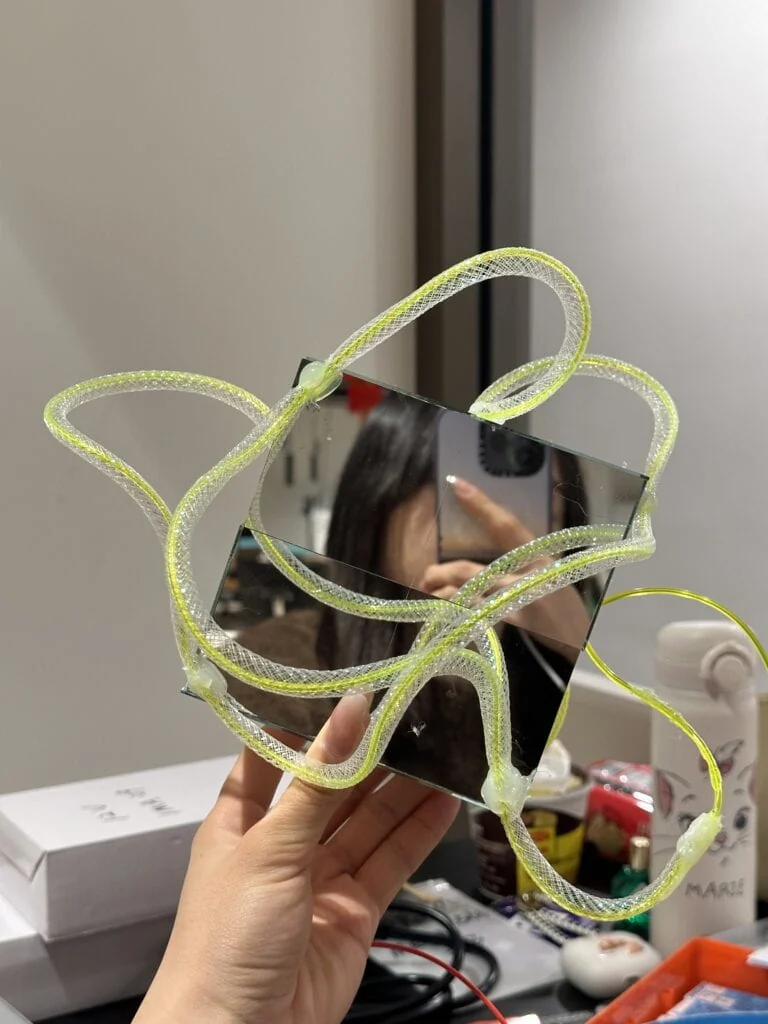
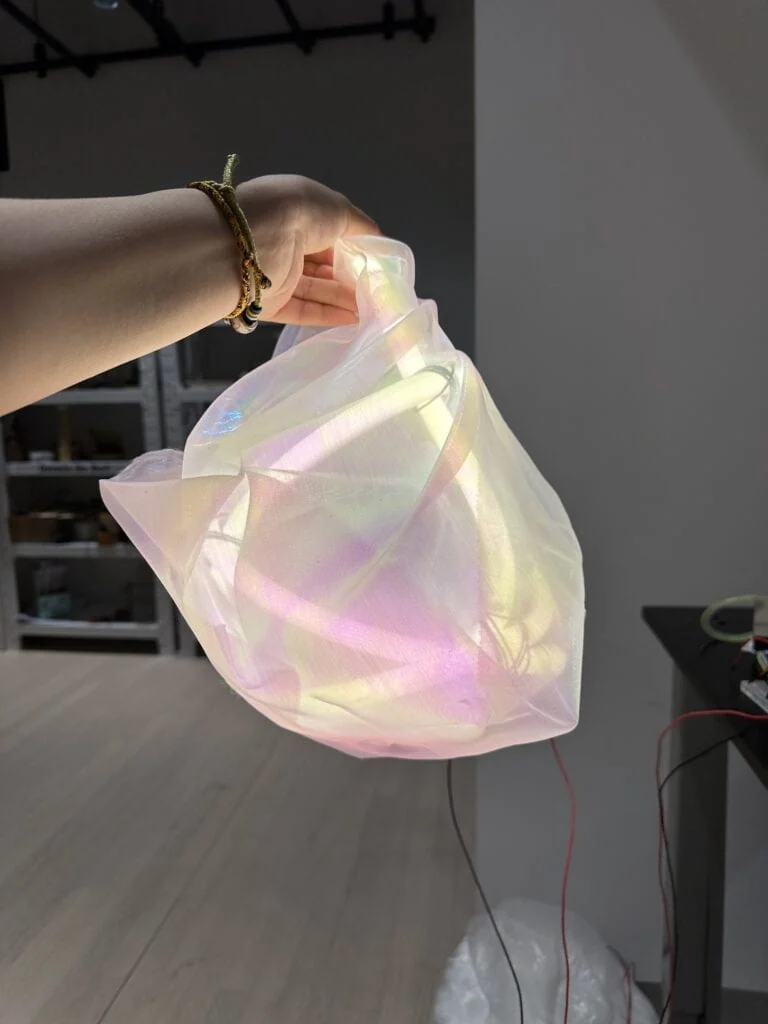
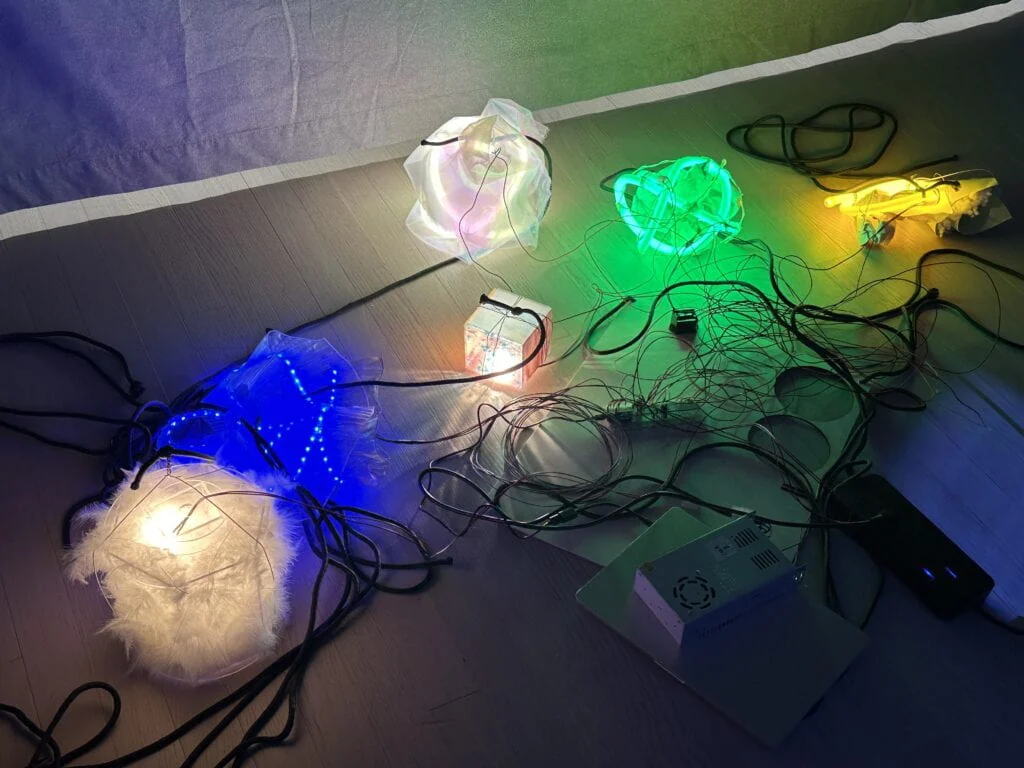
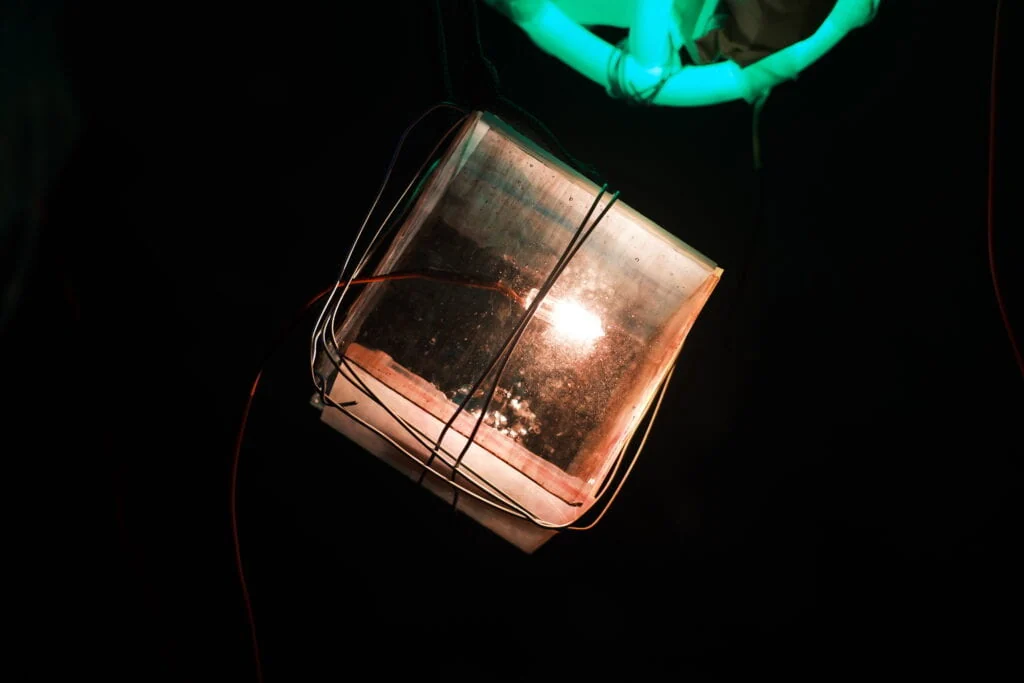
I started from the physical fabrication and installation part which I considered to be the foundation of the coding and the wiring parts. As my idea was to create several objects which are distinctive from each other, I came up with different ideas about how to make each of them and started separately. I started with one half of a tube made by mirrors that I ordered on Taobao, and intertwined a yellow EL wire onto it. After that, I built several other objects made by materials that either I had or I ordered on Taobao to finish this physical creation part. During this process, I utilized laser cutting, and enhanced my ability of hands-on work by using pliers to bend iron wires, polishing acrylic boards with sandpaper, folding paper into various shapes, and so on.
Having finished this part, I started to build the circuit of this project. I referred to the class slides and combined the circuit of all objects in one breadboard. One thing that I tried out at this stage was that I tried to use a transistor for several lighting objects. It seemed to work well in the beginning, so I just kept it and used the glue gun to secure the whole circuit.
Then, I wrote the code for my project. The code was easy, because both my professor and I thought that it would be better if I focus more on the shapes and looks of the objects instead of the complexity of the code. Therefore, I used basically the “blink” and “fade” function in the Arduino to light up my objects.
Presentation
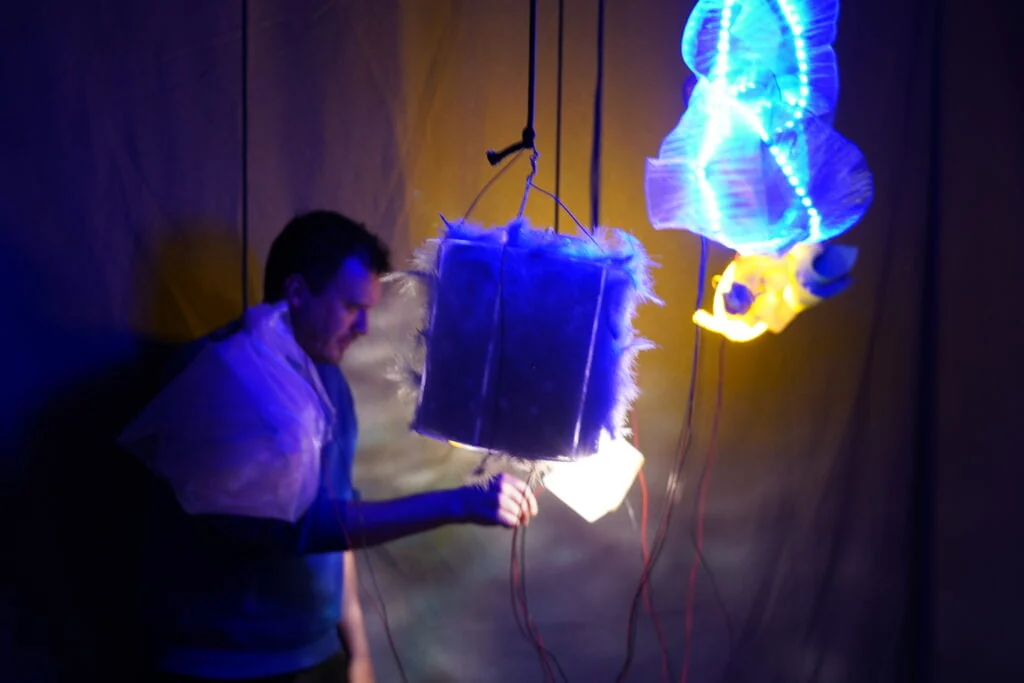
When it comes to the final implementation, basically I just hang my installation from the ceiling, and the audience could sit around it and look at it when the lights changed. The six objects changed at their own rhythm both in light and in motion, but altogether they formed a space where all kinds of light generated by neon tubes, halogen light bulbs and analog LED strips echoed with each other and generated a place where all of us could sit down , rest for a while and reflect back upon our own memories and generate our own understanding of the installation as a whole.
When it comes to the air blower, I tried it in advance but it turned out that it was way too noisy and could even surpass my own voice. Nevertheless, during the presentation, as the professor and some of my classmates touched either the ropes or the objects, the installation turned out not to be still and encompassed some motion, which coincidentally met my initial expectations.
Conclusion
However, there were a lot of problems before the final presentation due to the timing problem. First of all, some of the objects just stopped working before the final presentation. Later when I was disassembling the project, I found out that it was because one transistor burnt out before the presentation starts, which proved that one transistor may not be able to function several objects at the same time.
Besides, I didn’t had sufficient time to hang the board with my computer and all the wires on it to the ceiling, which greatly affected the visual experience of the installation itself.
The biggest thing I learnt during this experience was that I should have started earlier in order to make more space for me to make mistakes. Next time I wish I could come up with a more detailed plan about what to do and when to finish so that things wouldn’t end up all in a mess!
Images & code
analogWrite(6, brightness);
brightness = brightness + fadeAmount1;
if (brightness <= 0 || brightness >= 255) {
  fadeAmount1 = -fadeAmount1;
}
delay(30);
Credits
An individual project by Jingchen Gao, developed through Kinetic Light coursework and feedback from the instructor and classmates.